SEO Checklist 2026: Complete Website, Technical, On-Page and Off-Page SEO Guide
A detailed and actionable SEO checklist helps improve rankings, crawlability, and local visibility. At Natural Links, we use this SEO checklist to secure backlinks, improve content quality, and promote migration success. This increases indexability and authority for AI search engines.
What Is an SEO Checklist?
An SEO checklist is a structured process we use to audit and improve a website, relying on content, technical issues, UX, and authority signals. Our specialists use this checklist for new and existing websites, whether it involves migrations, blog content creation, or e-commerce platforms.
The main areas of SEO include the following:
On-Page SEO: Focuses on metadata, URL structure, headings, and schema markup
Technical SEO: Addresses indexing, crawlability, site speed, security, and mobile UX
Content SEO: Strengthens E-E-A-T, keyword intent, content freshness, and AI search optimization
Off-Page SEO: Involves backlinks, brand mentions, digital PR, and trust signals
Reporting: Monitors KPIs, GA4 tracking, rank tracking, and search console data
SEO checklists help us organize all requirements into actionable tasks. We then use them during every stage of development to prioritize tasks, review for updates, and monitor over time.
SEO Checklist 2026: Quick Overview
Each SEO area serves a different role and holds distinctive priorities. We use this website SEO checklist to decide which part of the strategy deserves attention first:
Category
Focus
Priority
SEO Setup
Analytics and tracking
Critical
Technical SEO
Crawlability and indexation
Critical
On-Page SEO
Metadata and content structure
High
Off-Page SEO
Authority and backlinks
High
Local SEO
Local rankings and map visibility
Medium
eCommerce SEO
Product and category pages
High
International SEO
Hreflang and targeting
High
SEO Setup Checklist
SEO setup focuses on benchmarking, measurements, and visibility. We use this checklist to configure Google Search Console and GA4, set up Bing Web Master Tools, and verify website ownership. We create reporting dashboards so we know what to follow.
Technical SEO Checklist
We use our tech SEO checklist to ensure search engines efficiently access and understand your website. Our experts audit crawlability, review indexation, and fix canonical issues to improve page speed. We also optimize your website’s mobile usability, check robots.txt, and implement a structured schema to improve trust and visibility.
On Page SEO Checklist
Our team uses an onpage SEO checklist to see how each page communicates intent and relevance. For example, we improve readability on your website with organized H2 and H3s, optimize meta descriptions, and strengthen content with keyword targeting.
We also add internal links to create a better flow for your website and increase crawlability.
Off Page SEO Checklist
Off-page SEO strengthens trust signals and authority from outside of your website. We secure and audit backlinks while removing or disavowing the harmful ones. We also recover unlinked mentions and improve link quality through relevance and diversity. This allows us to direct high-intent traffic to your platform.
Local, E-commerce & International SEO Checklist
Advanced SEO tools will be used based on your business model and target market to secure quality traffic. You’ll benefit from the following features:
SEO Type
Action
Benefit
Local SEO
Claim and optimize localized assets such as Google Business Profile.
Increases regional visibility for the business.
eCommerce SEO
Create strict parameters and canonicalization rules.
Improves faceted product navigation.
International SEO
Send out reciprocal hreflang configurations.
Isolates and redirects multilingual regional traffic.
For example, we perform Shopify SEO checks to assess product navigation and international URL structures.
Implementing an SEO Basics Checklist
Before we dive deeper into our SEO plan checklist, we create a solid foundation based on accurate data. Tools such as Google Search Console, Google Analytics 4, and Bing Webmaster Tools allow us to prioritize tasks, find opportunities, and measure results. This lets us see if our efforts are improving rankings, traffic, and revenue.
Set Up Google Search Console
We set up Google Search Console to obtain reports on search performance, indexing status, and Core Web Vitals. Our experts start the process by checking ownership through DNS verification or HTML upload. Once we do that, we submit the XML sitemap so Google can help us pinpoint important URLs. This gives us more insight into server errors and 404 pitfalls that affect your indexation and visibility.
Set Up GA4 and Conversion Tracking
We also set up Google Analytics 4 (GA4) to obtain more insight into user behavior once they arrive on your website. The focus is on actual conversion instead of simple organic traffic volume. Our team implements trackers for lead form submissions, eCommerce purchases, and newsletter sign-ups. This helps us identify assisted conversions and high-performing landing pages that bring the most sales in.
Set Up Bing Webmaster Tools
Google may remain dominant, but we also check data from users who access your content via Bing. Bing Webmaster Tools helps you obtain indexation reports, keyword insights, and backlinks analytics. We perform crawl monitoring and sitemap submission similarly to GSC, gaining extra insight that your competition may overlook.
Define SEO KPIs Before Optimization
Our SEO checklist 2026 defines clear success metrics that will be used during the measurement process. You’ll receive reports on common SEO KPIs such as organic clicks, impressions, backlinks, and rankings to demonstrate the impact of our SEO strategy. We also assess indexed pages, conversions, and Core Web Vitals to maintain functionality and relevance with changing algorithms.
Understanding Our Technical SEO Checklist
Technical SEO is important for search engines to easily crawl, parse, render, and store your website content correctly. Good content can fail to rank if poor technical SEO keeps search engines from discovering and understanding your pages. We focus on technical factors such as crawling, indexing, and mobile usability to break barriers.
Check Crawlability and Indexability
We make sure that search engine bots can easily access and index your content without any roadblocks. Your website will be audited for potential server errors, and robots.txt will be checked for mistaken blocks. Our technical SEO audit checklist marks up unwanted noindex tags in your blog posts and landing pages, making sure the HTML source code remains visible.
Blocked sources will also be reviewed because search engines must see the pages effectively. We assess whether JavaScript and CSS are blocked in your directive and use GSC to look for unindexed URLs. Crawl depth will be minimized for the most important pages, keeping them within three clicks (at most) from your homepage.
Review XML Sitemaps
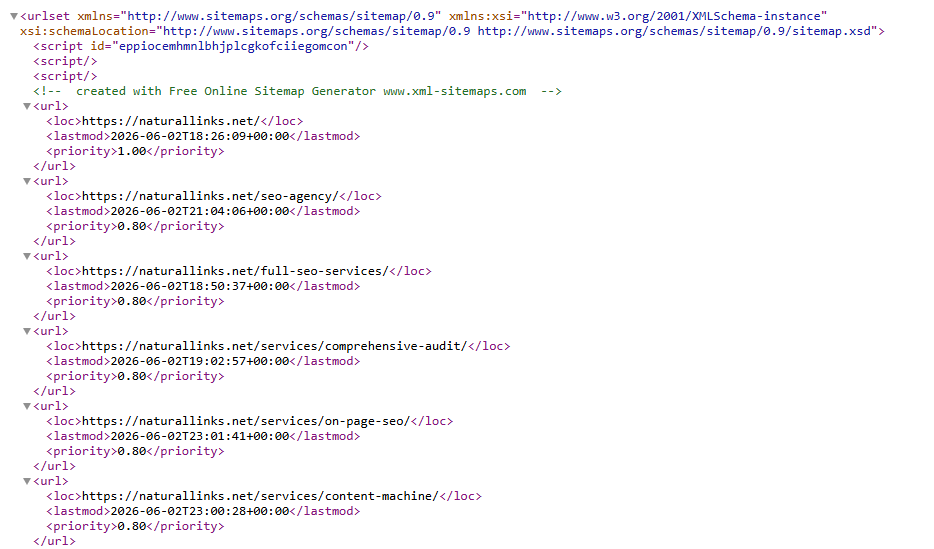
Sitemaps are the roadmaps that search engines use to prioritize which pages get crawled first. Our SEO technical checklist enables us to include only indexable URLs and remove 404 pages, along with canonical redirects that point elsewhere. If there are any URLs blocked by noindex or directives, we flag and remove them as well.
We update the lastmod regularly to reflect website changes. Our team also watches file limits and prioritizes content, keeping the sitemap under 50,000 links where possible. A clearly formatted sitemap will be submitted to GSC to track indexing, which ensures your most important content has coverage.
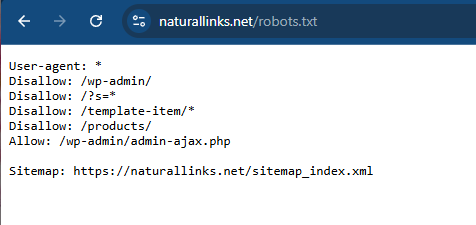
Audit Robots.txt Rules
Bots check robots.txt first when they visit your website, and an incorrect setup can accidentally de-index an entire section of your page. We allow important pages and JS, CSS, and image folders to remain accessible. Through our SEO checklist, we review files for unintentional disallowed directives and legacies that point to old website versions.
Our strategy also checks for potential no-index conflict. We make sure we don’t accidentally block pages that need noindex discoverability by Google. In the end, you will get a simple and clean robots.txt file that aligns with your current indexation strategy.
Fix Canonical Tag Issues
Canonical tags allow search engines to understand which page version should be treated as the main one in case of duplicates. We use self-referencing canonicals that point to the target URL, such as <link rel="canonical" href="https://naturallinks.net/blog/editorial-links/"> to prevent ranking dilution.
Special attention is paid to parameter URLs, duplicate category pages, and pagination to support your indexation goals. This makes it easier to spot common problems such as incorrect destinations, canonical loops, and missing title tags.
Improve Core Web Vitals
Core Web Vitals are an important part of our checklist SEO because Google officially uses them to assess user experience. We check the following:
Largest Contentful Paint (LCP): Shows loading performance
Interaction to Next Paint (INP): Evaluates responsiveness and speed
Cumulative Layout Shift (CLS): Checks visual stability during loading
We compress images to optimize mobile performance and use modern image formats such as AVIF or WebP to improve speed. Excessive JavaScript and third-party script executions are also reduced to address performance bottlenecks and increase response times.
Make the Website Mobile-Friendly
Google prioritizes websites that use mobile-friendly indexing, so we focus on usability instead of a shrunken desktop. Our mobile SEO checklist ensures the design is responsive and the website adapts to both portrait and landscape orientation.
We address common issues such as tiny tap targets, complex mobile navigation menus, and intrusive pop-ups. Finally, our team tests for mobile-first UX across multiple screen sizes and devices to find problems that automated tools may not see.
Use HTTPS and Improve Website Security
Website security influences trust and search performance. Your website must operate with HTTPS entirely, with a valid SSL certificate. Our technical experts can implement proper redirects from HTTP to HTTPS while ensuring secure forms.
We address and offer protection against mixed content warnings, which happen when a page tries to load through an unsecured connection. By following an SEO technical audit checklist, we’ll look for outdated plug-ins, login protection, and vulnerable software versions. This allows you to offer a safe experience for your users.
Add Structured Data Markup
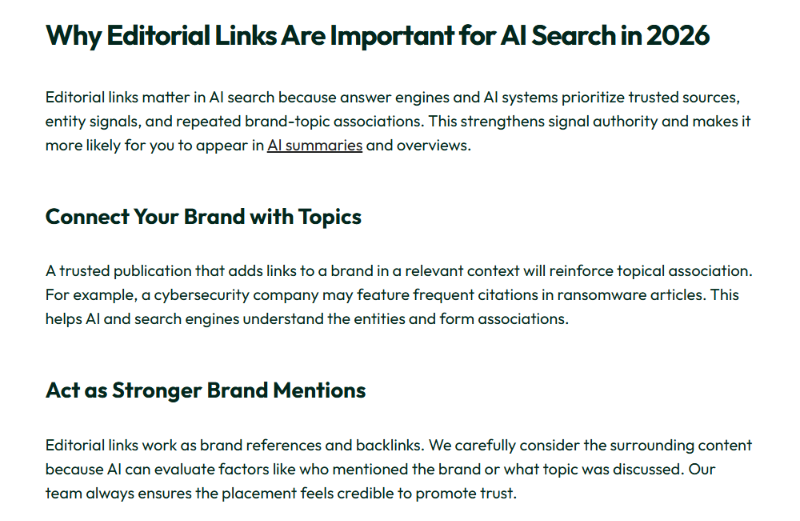
Natural Links implements structured data so search engines can better understand the meaning and content of your website. This is important for your visibility in AI Overviews, which rely on content interpretation to determine if your information is reliable.
A machine-understandable schema will be created through proper brand organization, article and blog postings, product pages, and FAQ sections. We also use LocalBusiness to draw local citations and improve map visibility. The Rich Results Test from Google will validate all these elements for error-free implementation.
Get instant access to 50k+ verified publishersand secure placements without outreach.
On-page SEO optimizes individual pages on your platform so they rank higher and earn relevant traffic from search engines. It addresses both content and HTML source code optimization, including on-page SEO factors such as meta descriptions, title tags, headings, and internal links.
Optimize Title Tags
Title tags are the first thing that draws a reader to your page, which is why we use the highest-volume keywords there. We place your main keyword as close as possible to the start of the title while maintaining a natural flow.
Your title tags will match search intent to draw actionable visits, as they’ll be structured based on benefits or solutions. Google doesn’t impose a limit, but we keep the title tags between 50 and 60 characters for maximum visibility.
Write Strong Meta Descriptions
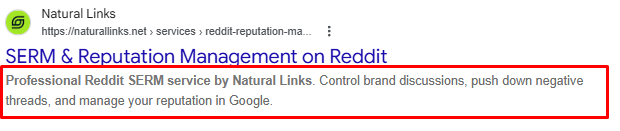
Meta descriptions influence click-through rates because they summarize the content and encourage visitors to click on your website. While going through our SEO onpage optimization checklist, we make sure the descriptions naturally include the primary keyword and highlight the main benefit to encourage action.
Meta descriptions remain unique across the website per page and act as a mini advertisement. We write them between 140 and 160 characters long for maximum visibility and include a call-to-action (CTA) to increase the number of clicks.
Use One Clear H1 Per Page
The H1 represents the core topic of your page and determines if the reader has use for it. Every page should have a unique H1 that matches the search intent and includes the primary or secondary keywords (where appropriate).
We avoid adding generic headings because they don’t reflect the page content and are skipped over. Our SEO best practices checklist also advises against multiple H1s to keep a clear hierarchy.
Structure Content with H2s and H3s
Well-structured content makes it easier for readers to scan through content and find the information they seek. We also use it to help search engines understand the connection between your topics and subtopics. Well-organized content has a higher chance of appearing in a snippet, and generative AI answers.
We use H1 for the main topic, H2s for major sections, and H3s for supporting sections. When needed, H4s are created for deeper entity optimization.
Match Search Intent
Many pages fail to rank because they do not effectively align with the search intent. We make sure that search engines prioritize your content based on what satisfies the intent. Our SEO content checklist is based on four categories: informational, transactional, commercial, and navigational.
For example, a page called “What is technical SEO” falls in the informational category, whereas “buy SEO audit services” is transactional. Good content alignment improves your ranking potential.
Optimize Images and Alt Text
Images improve user experience, but search engines must understand them properly. Images are compressed before uploading so we don’t overburden the website, and we choose formats such as WebP where possible.
To meet the Google ranking factors SEO checklist, we make sure that the images have descriptive filenames and contextual alt texts. This offers better context for screen readers and makes your web pages more accessible to minorities.
Add Internal Links Naturally
Internal links connect related content naturally and guide the user towards valuable resources. We use them to link to related services, blog posts, and commercial pages, creating support for topical clusters.
Options depend on the page hierarchy and opportunity. Services pages can link to case studies for better authority, and blog posts can link to service pages to trigger action. You will get a mix of contextually relevant anchors to create a balanced portfolio.
SEO Content Checklist 101: Useful Tactics
Even a basic SEO checklist can boost content if it’s well-optimized. We focus on comprehensive, authoritative content that satisfies user intent and dominates SERP rankings.
Start With Keyword and Topic Research
Our SEO copywriting checklist does not rely on intuition, but on a data-backed foundation. We identify the primary keywords to place in the H1 and first 100 words, followed by secondary keywords to position under H2s and H3s.
The competitor analysis helps you identify missing gaps and content opportunities. We check the top 5 ranking pages to determine why they work, noting their format, content, and media used.
Build Content Around Search Intent
Our team builds the content to answer the exact problem that users are searching for. By avoiding generic, long-winded introductions, we ensure the answer is immediately visible in the first paragraph or the first sentence underneath the heading. We also match by format, writing step-by-step tutorials for “how to” queries or similar searches.
Add Helpful, Original Information
Google’s guidelines prioritize E-E-A-T (experience, expertise, authoritativeness, and trustworthiness) that rely on originality. Your content should offer something new for search engines rather than constantly repeating the same info. Aside from detailed process explanations, expert notes, and data analyses, we include examples, screenshots, and templates. This makes your content not only useful and practical but also actionable.
Refresh Outdated Content
Freshness is the most important part of content optimization because relevance declines with time. If your ranking drops, the quickest way to bring it back up is to update the previous content. We replace outdated tools and screenshots, update the years, and revise the old recommendations accordingly. Our SEO checklist for blog posts also includes updating statistics to match the current year and removing broken links.
Add FAQ Sections Were Useful
You should take advantage of FAQs to target long-tail keywords and offer quick answers to real questions. Our experts base these FAQs on actual queries or PAA boxes, avoiding generic questions. We focus on queries that expand topic coverage and clarify complex concepts connected to your page.
Optimize for AI Search and Answer Engines
AI overview prioritizes concise, direct, and structured information. We explain the core entities or concepts in 1-3 sentences and use bullet points or numbered links to break down the structure. Our WordPress SEO checklist includes citation-worthy explanations based on accurate, authority-backed information.
UX Tip: Search engines pull information from snippet-ready, structured answers so they can feed it to AI search results. Your content will be optimized so it contains clear information, increasing its chances of being featured.
Our Off-Page SEO Checklist
Off-page SEO builds domain authority and improves search engine visibility of your domain through steady referral traffic. Through external links, brand mentions, and other link-building strategies, we bring high-intent organic traffic.
Audit Your Backlink Profile
Our SEO checklist for new websites begins with a clear baseline of your backlink health. We analyze the domain rating (DR/DA) and keep track of your overall authority growth, ensuring your anchor profile is not overoptimized with exact-match terms. Toxic or lost links are identified and cleaned or replaced depending on your goals and possibilities.
Build High-Quality Backlinks
Quality brings better results compared to sheer volume because it signals trust. We make sure the linking website or page is related to your topic or industry and that the hosting platform holds high authority.
Websites that draw organic and measurable traffic are prioritized to avoid falling in link farm traps. We secure placements that are woven naturally into the content using a natural anchor. This offers you contextual links that don’t seem forced.
Use Guest Posting and Digital PR
We use a mix of high-impact digital PR and proactive outreach when we follow our e commerce SEO checklist. Your SEO goals will determine which tactic works best between digital PR and guest posting.
Guest Posting: Works when you want to control the narrative and establish thought leadership. It’s an opportunity to secure topical or exact-match anchor texts and lets you place authoritative content in front of a niche audience.
Digital PR: It earns authority, high-quality links from press releases and top-tier publications such as Forbes or Bloomberg. The tactic works best when publishing original research, proprietary data, or major company announcements.
Guest posting involves us creating valuable content for third-party websites in exchange for exposure and visibility. Digital PR is the better choice when you already have the exposure, but want to build your credibility.
Recover Unlinked Brand Mentions
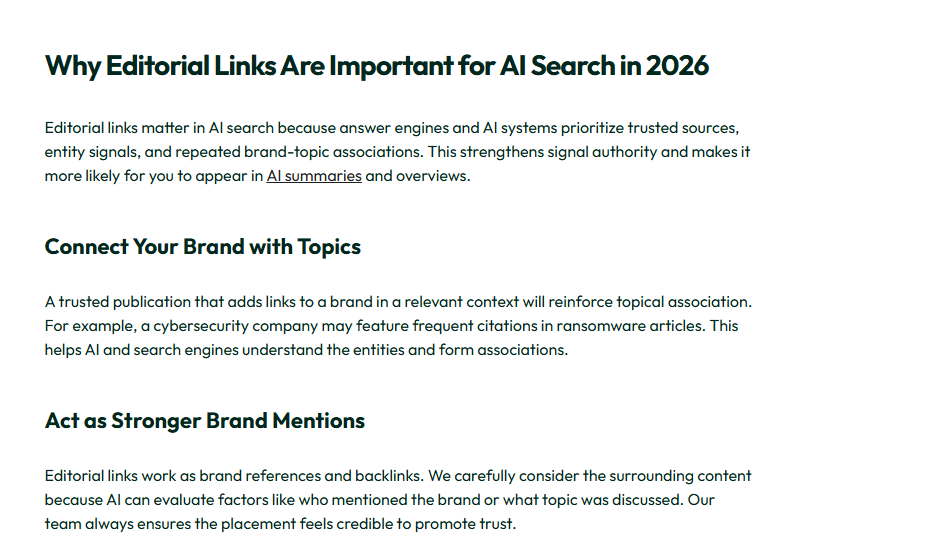
Not all brand mentions come with links, because many of them are editorial (i.e., the publisher included them naturally). Recovering links from those mentions is one of the easiest steps on our SEO checklists because the anchor is already there.
Our specialists use tools such as Google or Ahrefs alerts to look for brands, mentions, and citations before reaching out to the host. We thank them for their recommendation and politely suggest adding a link to make matters easier for their readers.
Diversify Anchor Texts
Overoptimizing with exact match anchors looks unnatural, so we create a healthy mix of diverse anchors. Your company name is used for branded anchors or your home page for naked URL anchors.
Partial and topical matches explain the link better while not looking out of place. Natural or generic placements are a better choice for CTAs. We consider the context, but also maintain a balance between anchor texts.
Narrowing Down with Our Local SEO Checklist
We use our local SEO checklist to help you outrank your competition and bring geographically localized traffic to your page. This is important if you only operate within specific areas. Our experts optimize Google Business Profile, local SERP, and listings to improve visibility.
Optimize Google Business Profile
The Google Business Profile (GBP) is the main visibility driver for Google’s Local Map pack. Here, we review elements such as your primary and secondary categories, service menus, photo assets, review loops, and general business info. This way, you can claim your profile and fill it out so it reflects your main operational model, drawing high-intent local visitors.
We encourage every satisfied client to leave a review and take the time to respond to each of them. Responses are always kept professional, no matter the nature of the review.
Keep NAP Information Consistent
Minor inconsistencies in name, address, and phone numbers across directories can confuse search algorithms and dilute your authority. Something as simple as writing “Suite 200” on one site and “#200” on a different one throws the algorithm off. We check your name, address, and phone number (NAP) and ensure they’re identical across every platform for consistency.
Build Local Citations
Local citations help search engines validate the existence of your business, proving that you serve a real audience. We look for citation opportunities in local and industry directories, local chambers of commerce, and niche platforms. Our experts perform regular citation audits to find duplicate listings and outdated information. Quality and relevance are prioritized instead of submitting to hundreds of low-value directories.
Add LocalBusiness Schema
You need a LocalBusiness schema markup because it’s the backend code of your website. It translates your content to the algorithm and offers additional context about your location and business.
We use the schema to help search engines understand important facts such as business details, opening hours, and service areas. Our process also involves declaring localized customer review aggregates, which connect your digital site to the brick-and-mortar location.
Create Location-Specific Content
If your business operates across multiple cities or districts, we create unique and helpful landing pages for every location. International targeting works well when you have a digital business that runs across every state, but some location-bound businesses need local targeting.
We create content such as city pages, service area pieces, and local guides that feature relevant information for the spot on the map. This includes local references, specific content, and customer testimonials from the area.
Boosting Sales with E-commerce and Shopify SEO Checklist
We have a dedicated eCommerce SEO checklist because shopping sites need a specialized technical configuration. This helps us ensure that your domain can handle complex categorization rules, thousands of product pages, and dynamic filtering setups. It makes browsing easier for your visitors and reduces bottlenecks.
Optimize Product and Category Pages
Product and category pages are the first things that both human visitors and search engines see. Your category headers should contain informative text alongside the targeted keywords. You also need unique descriptions for every product.
We avoid manufacturer descriptions because they rarely offer value beyond basic specifications. Our team injects a clean product schema, sets up filters for product pages, and addresses indexation, so your content is easily found by search engines.
Manage Faceted Navigation
During the technical audit, we look for opportunities where we can improve faceted navigation. Our specialists set this up to make it easier for your users to filter by attributes such as size, color, brand, material, markets, and more.
This is a good alternative to standard filters because faceted navigation reduces the chance of duplicate content through canonicals, noindex directive, and robots.txt controls. We use URL parameter handling to bring the focus to the valuable pages.
Improve Product Images
Images influence user purchase power while boosting search visibility. Large images load slowly, causing frustrations for your visitors and sending them to your competition.
We compress or convert your images into lightweight formats such as WebP or AVIF to improve load time. Descriptive alt texts will be added to product photos, and lazy loading will be implemented for images sitting below the fold. This increases user experience and your website’s responsiveness.
Add Internal Links Between Categories and Guides
A link audit helps us find missing connections between categories and guides. Your buying guides and informational blog posts will be linked to your category pages and product collections to improve navigation and distribute authority.
For example, we can publish a buying guide titled “How to Choose the Best Air Mattress for Camping” and link it to your main air mattresses category. Our specialists will use clear and contextual anchors that look natural.
Shopify SEO Checks
Shopify offers a strong base for eCommerce SEO, but the problem is that the platform frequently duplicates product pages when accessed through “Collections.” We use our SEO checklist to audit for these duplicates and remove them. This way, your website points the canonical tag to the correct root.
We remove unused Shopify add-ons to minimize app bloat, as the lingering JavaScript elements can slow the theme speed. Through clean, structured data setups, we optimize collection pages and avoid technical conflicts. Ultimately, you can enjoy functionality improvement that positively impacts SEO.
International SEO Checklist
At Natural Links, we use international SEO to scale your business beyond the borders of your headquarters. We implement an international SEO checklist to tell search engines which countries or languages you want to target. Like this, you don’t risk missing out on untapped markets.
Choose the Right URL Structure
The right URL structure informs search engines of your target audience. We use ccTLDs (Country Code Top-Level Domains) such as “.de” for Germany to build deep trust in that country.
Subdomains like de.naturallinks.com are useful for isolating your server management when operating in specific areas. We also use subfolders such as naturallinks.com/de/ if you want to share domain authority with the main site.
Implement Hreflang Correctly
Hreflang attributes tell Google which variant of your page to deliver to users based on their chosen language and region. We use reciprocal tags, which means that if page X points to page Y, then page Y must point back to page X.
An x-default tag will also be implemented for speakers whose language you don’t explicitly target. This redirects them to the international version of your site.
Localize Keyword Research
Search habits can vary widely by region, so we never directly translate keywords. Instead, we use native keyword tools to check for demand and discover culturally-relevant keywords. The content audit determines if your target words match what the users actually type.
Keep Internal Links Language-Specific
Our strict internal linking structure avoids sending users to the wrong language versions of the page. If a user reading your blog speaks English, we will send them to an English product page, not a Spanish one. This improves user experience and prevents bounce rate spikes. We regularly add this to our SEO audit checklist to make sure the links are not mixed incorrectly.
Our SEO Migration Checklist
Website migrations can hurt visibility and organic traffic because they break the connections from the old domain. Our website migration SEO checklist can protect your ranking and traffic during the transition and beyond.
Crawl the Old Website Before Migration
Before we start the actual site migration, we perform a baseline crawl of your old website. Tools such as Screaming Frog help us export an inventory of all your current data. This includes the URLs, metadata, canonicals, status codes, and internal links. The export will be saved to serve as a reference point during comprehensive audits later, when our specialists will look for broken links or orphaned pages.
Map Old URLs to New URLs
If you need to change the URL structure of your site, we will create a full redirect map before we launch the new website. Our SEO website migration checklist includes creating spreadsheets, where the old links are lined up with their new destination. We don’t add old links to the home page to avoid 404 errors, only pointing the pages to their equivalents.
Preserve Metadata and Content
Many businesses accidentally overwrite well-optimized metadata and content during platform redesigns. Our SEO checklist template ensures your page titles, meta descriptions, headings, and copy are saved and properly migrated to the new domain. The new site will be cross-referenced with the pre-migration crawl report so nothing important is missed.
Test Redirects Before Launch
At Natural Links, we never assume that redirects will work effectively without testing them first. We always set up a staging environment using browser developer tools and other aspects to prevent incorrect, broken, or missing redirects.
All 301 redirects must reach their destination smoothly, so there are no long redirect chains or loops. We also look for broken 404 errors that appeared accidentally before launch.
Submit Updated Sitemaps After Launch
After going live, we signal search engines right away to speed up the re-indexing process. A new XML sitemap will be generated to reflect your new website architecture. We’ll submit it to the Google Search Console.
Experts monitor the indexing to make sure no important pages are blocked or accidentally set to noindex. You can enjoy near-immediate crawling of the new URL structure as the tool processes the redirects.
Monitor Rankings and Traffic After Migration
SEO monitoring is important after migration because it lets you check for blind spots. Fluctuations are normal during migration, but we keep a close eye on significant changes. We use the GSC performance report to watch for drops in impressions, clicks, conversions, and index pages. By comparing your current traffic metrics against the previous month, we quickly identify any visible anomalies.
SEO Competitor Analysis Checklist
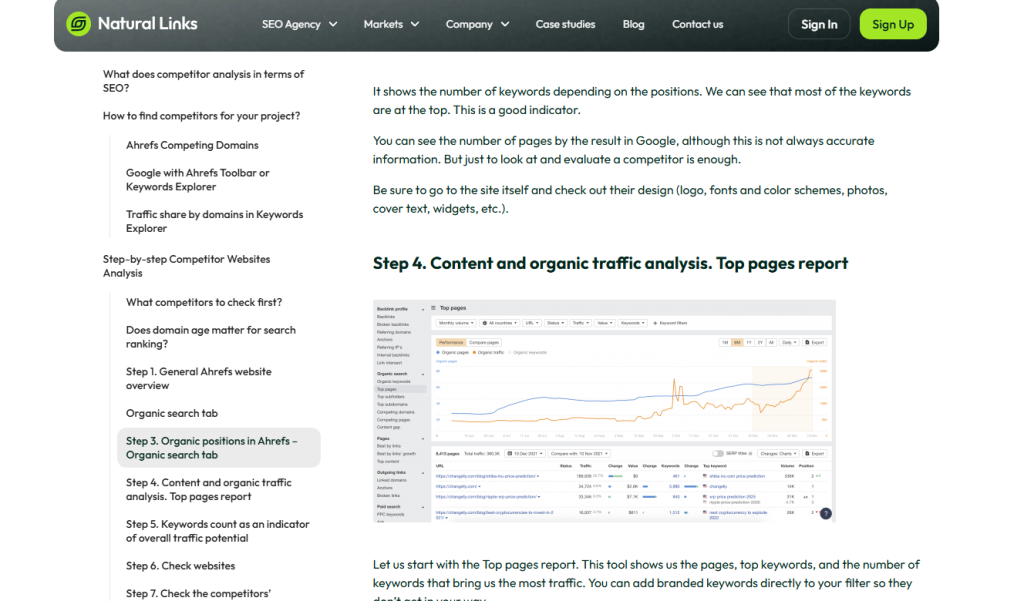
A competitor analysis checklist allows you to look for SEO opportunities based on what is currently working for your business rivals. We look into aspects such as traffic sources, keyword gaps, and content structure to refine your content.
Identify Organic Competitors
We find your true, organic SERP rivals rather than just your business competition. This is important because a company may compete with you commercially, without targeting the same query. Look for websites that rank based on your primary keyword and note down the competitors that consistently appear at the top.
Our agency uses organic research tools to map out what sites occupy your target SERP and what non-branded traffic might overshadow your authority. This helps us understand what search engines prioritize, so we can adapt our strategy.
Compare Ranking Keywords
We take your first 2-3 SERP competitors and run them through keyword research tools. This helps us discover the main phrases that bring most of their traffic. We look for keyword gaps that you’re missing, uncovering high-volume search terms that your competition is ranking well for.
The list of keywords is filtered by search intent (commercial, informational, and transactional), determining which options work best for your strategy. We pay particular attention to keywords that align with your business goals and have an achievable competition level.
Analyze Competitor Content Structure
Our team looks for the highest-ranking pages of your competition and checks for identifiable patterns. It analyzes the content length and the specific subtopics they choose to cover, along with how they incorporate their FAQ section.
We assess the type of media, templates, or interactive tools they implemented to engage with their readers. The SEO checklist will focus mostly on matters such as depth of explanation, user experience, and clarity. With this information, you can create a more resourceful piece based on the gaps.
Review Competitor Backlinks
The link profile of your competition will be verified to see where they get their highest-authority links from. We analyze the referring domains, looking at the number and quality of the domains that link back to your top competitors.
Link intersect tools help us find which websites are linking to most of your competitors, but not to you. Our SEO specialists also audit the link velocity and anchor texts, checking the types of links that they are acquiring for their off-page link building.
SEO Monitoring and Reporting Checklist
Search optimization is an ongoing process that requires you to adapt to algorithmic shifts and prevent relevance drops. Our SEO checklist includes ongoing monitoring that lets us measure progress for your business, identify early problems, and prioritize future efforts for optimization. The SEO reporting you’ll receive is based on meaningful performance instead of vanity metrics to assess long-term business value.
Track Organic Traffic and Conversions
Organic traffic tells us whether your strategy is bringing high-intent visitors who end up buying from your page. We keep track of metrics such as organic sessions, conversions, revenue, and form submissions to confirm our efforts drive real business growth.
Our experts primarily use Google Analytics 4 to identify top-performing pages, typical conversion paths, and user behavior. We also integrate CRM and lead tracking systems alongside our CSG reports to understand which SEO activities create qualified opportunities. This lets you prepare your website for real growth instead of just visits.
Monitor Keyword Rankings
We gain more insight into your content’s search visibility by keeping track of keyword rankings. Our experts track priority keywords on your landing pages to measure progress, placing particular attention on primary, secondary, and local keywords. Rankings for commercial, brand, and non-brand keywords will also be monitored.
Our full SEO service looks for broader ranking trends instead of isolated position shifts. Search results shift constantly with new content, so you should prioritize long-term ranking changes.
Review Indexing and Crawl Errors
Your Google Search Console account will be checked regularly to maintain good technical SEO and find issues before they affect your performance. Our SEO monitoring checklist prioritizes issues such as indexing or crawl errors, excluded pages, or sitemap problems.
The GSC Pages report shows exactly what pages are marked as indexed or not indexed. Crawl Stats are also checked to make sure GoogleBot doesn’t waste resources on low-value pages.
Track Backlink Growth and Lost Links
Tools such as Ahrefs, Semrush, and Majestic can monitor your incoming links from digital PR, guest-posting, and other link-building campaigns. We check metrics such as new or lost referring domains, link quality, and total backlinks.
Our team also pays attention to spikes in spam links or lost backlinks. If there are any editorial links that were lost during a site update, we reach out to recover them.
Refresh the Checklist Quarterly
Search algorithms constantly change, so we refresh this SEO checklist every quarter. We run audits for content optimization using GA4 data and check for competitor decay or competitor movement. For example, our link building checklists tell us which of your backlinks has suffered a drop in organic traffic or if you have been overtaken by your competition.
Final Thought
Modern SEO success relies on a balance between technical excellence, quality content, and authority. Whether you are launching a new site or migrating to a new one, contact the Natural Links team for a professional SEO audit. We can help you find the blind spots in your strategy!
Crowd marketing offers a myriad of benefits that can significantly enhance a brand's online presence. Here is a detailed list of the advantages crowd-marketing offers
Glenn Gabe is a specialized author, marketer, entrepreneur, and blogger. His contributions to the SEO community directly reflect his extensive experience of more than 25 years in digital marketing