Best SEO Tools in 2026: 18 Platforms Tested for Real SEO Workflows
There is no single best SEO tool that will work for everybody. That’s just not the case. Some SEO tools have great keyword research and competitor analysis capabilities. Others have amazing capabilities in technical crawling, backlink research, ranking analysis, content optimization, local SEO, reporting, and outreach.
In this post, the Natural Links team analyzes the top SEO tools in 2026 using real-life examples. Ahrefs wins as the most advanced research tool. SE Ranking wins the title of the best all-in-one SEO platform for agencies that require all these functions to be done in one subscription. Google Search Console is always the number one free resource providing search data, whereas Screaming Frog is always the most helpful SEO crawler.
This list includes both free and best paid SEO tools for newcomers, freelancers, in-house teams, local SEO experts, and agencies.
Best SEO Tools in 2026: Quick Comparison
SEO tools seem similar at first glance. However, after testing them in real-world workflows, they will start to show their differences. Some provide more comprehensive research capabilities; others can help you save time on reporting, audits, or localization. The table below represents the comparison between the best tools for SEO:
Tool
Best For
SEO Category
Free Plan or Trial
Starting Price
Ease of Use
Main Advantage
Main Limitation
Rating
Ahrefs
Research, backlinks & competitors
All-in-one SEO
Limited free access
$29 monthly for Starter
Medium
Deep research & competitive data
Expensive; estimates need verification
9.5/10
SE Ranking
Agency SEO workflows
All-in-one SEO
14-day trial
$129 monthly; $103.20 with annual billing
Easy-medium
Broad agency features & reporting
Less specialist depth
9.2/10
Google Search Console
Google search performance
Free SEO tool
Free
Free
Easy-medium
First-party Google data
No full competitor research
9.4/10
Screaming Frog
Technical SEO audits
Website crawler
Free up to 500 URLs
$279/year
Advanced
Powerful, customizable crawling
Steep learning curve
9.4/10
Lumar
Enterprise technical monitoring
Enterprise technical SEO
Demo
Custom
Medium
Continuous monitoring at scale
No transparent pricing
9.1/10
Sitebulb
Visual technical audits
Technical SEO audit
14-day trial
Starting at $18/mo
Medium
Clear visual reports & prioritization
Advanced features require higher plans
8.8/10
AccuRanker
Keyword rank tracking
Rank tracking
Demo/trial
$249/mo;$224/mo annually
Easy-medium
Fast, dedicated rank monitoring
Cost scales with keywords
9.0/10
Surfer
Content optimization
Content optimization
Trial
$49 monthly for Discovery, billed annually
Easy
SERP-based content guidance
Can encourage over-optimization
8.7/10
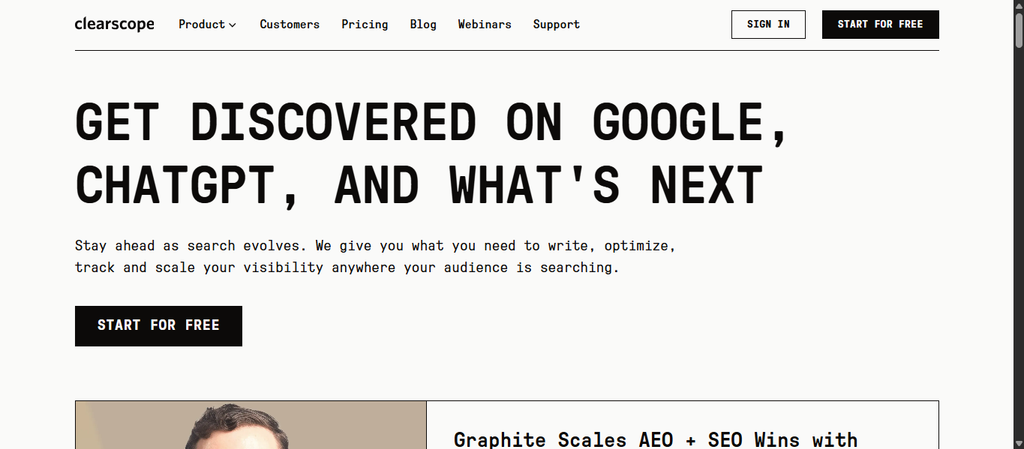
Clearscope
Professional content teams
Content optimization
14-day trial
$129/mo
Easy
Strong editorial workflow
Expensive for small publishers
8.8/10
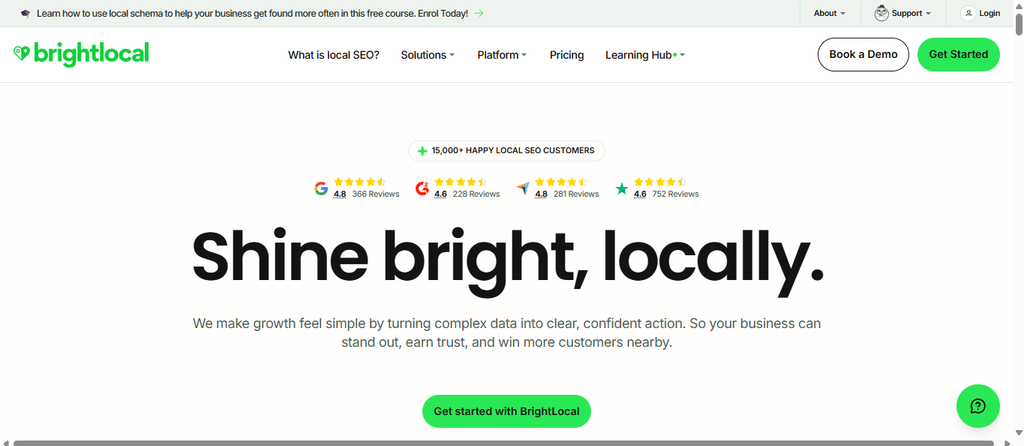
BrightLocal
Local SEO
Local SEO software
Free trial
$41/mo;$41/mo annually
Easy
Strong local and map reporting
Focused mainly on local SEO
8.9/10
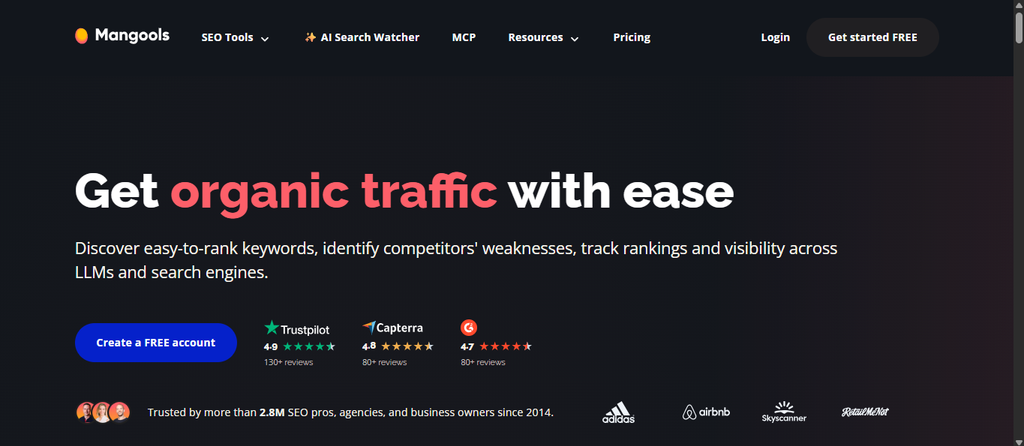
Mangools
Beginners & small businesses
SEO toolkit
Trial version
$30.50/mo;$18.85/mo annually
Very easy
Simple and beginner-friendly
Limited advanced data depth
8.4/10
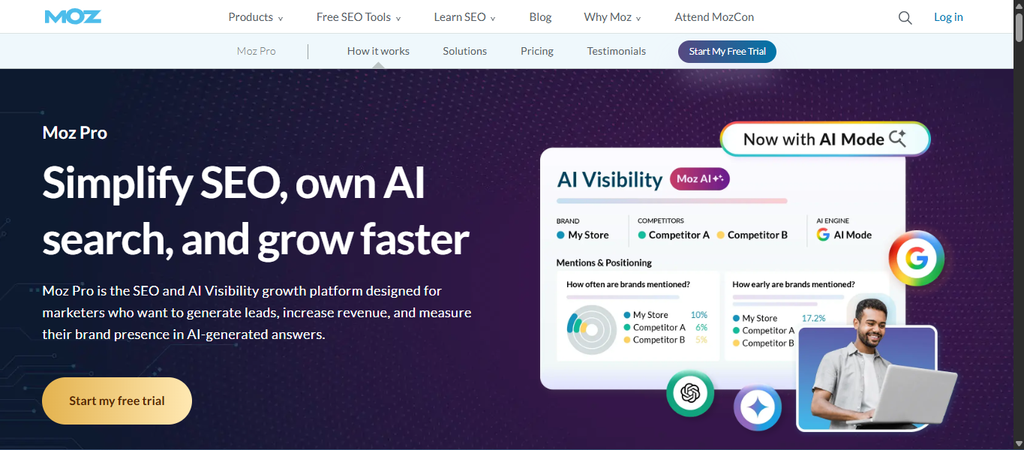
Moz Pro
SEO learning & core workflows
SEO platform
Free trial
$99/mo;$79/mo annually
Easy
Accessible metrics & interface
Less competitive data depth
8.2/10
BuzzStream
Link-building outreach
Link-building management
Free trial
$49/mo
Medium
Excellent outreach CRM
Not a backlink database
8.5/10
Rank Math
WordPress SEO
WordPress SEO plugin
Free version
€7.99/mo
Easy
Strong on-page WordPress controls
Cannot replace full SEO tools
8.6/10
Google Analytics 4
Traffic & conversions
Analytics
Free
Free
Medium
Connects SEO to business results
Limited keyword-level SEO data
8.8/10
Looker Studio
SEO dashboards & reporting
Reporting
Free core product
Free
Medium-advanced
Flexible reporting dashboards
Quality depends on setup
8.6/10
Google Trends
Trends & seasonality
Free trend tool
Free
Free
Easy
Excellent demand trend insights
No exact search volume
8.1/10
Bing Webmaster Tools
Bing SEO & technical checks
Free SEO tool
Free
Free
Easy-medium
Free extra search & audit data
Limited value for Google-only SEO
8.0/10
Pricing checked: August 2026. So, what is the best SEO tool in terms of pricing? Ahrefs offers Lite, Standard, and Advanced plans for $129, $249, and $449 per month, respectively. Enterprise starts at $1,499 per month. SE Ranking offers the following monthly plans: Core ($129), Growth ($279).
Our Top SEO Tool Picks
The best SEO tool depends on the job. In the vast majority of cases, Ahrefs will be the best choice among keyword research tools. The best all-in-one SEO software is SE Ranking. It suits agencies that do not need to move to enterprise solutions yet.
For free SEO data, Google Search Console integration is non-negotiable. It gives verified organic search performance and indexing data for your own properties. Screaming Frog is the best technical SEO crawler for hands-on audits. Lumar is best for enterprise technical monitoring. AccuRanker wins for dedicated rank tracking.
For content optimization, Surfer is a strong option. BrightLocal works best for local SEO. Mangools is better for beginners. Rank Math ranks among the best SEO tools for WordPress implementation. These picks are not a universal ranking from first to last. They represent different SEO workflows, and they differ from generative engine SEO tools.
How We Tested the Best SEO Software
The comparative study was based on the practical application of SEO tools in connection with particular tasks. Where possible, tools were reviewed with the same website, keyword set, or client-style project. When that was not practical, each platform was tested through the workflow it was built to support. We also check the best SEO software reviews for the perfect choice.
Real SEO Tasks Used for Testing
The test tasks included keyword cluster research, competitor keyword gap analysis, backlink profile review, and site crawling. The team also checks for indexability, internal link analysis, rank tracking, content optimization reports, SEO dashboards, local visibility reviews, and outreach software prospect management.
SEO Data Quality and Coverage
The top SEO software shows data that helps a specialist make better decisions. Keyword databases, backlink index, SERP history, location coverage, update frequency, and historical data all matter. Still, third-party keyword and traffic numbers are estimates. They should be compared with first-party data from Google Search Console and GA4 whenever the website is verified.
Core SEO Features
The strongest tools were not rewarded for having the longest feature list. Some key elements were:
Keyword research;
Competitor research;
Backlink research;
Technical audit;
Rank tracking;
Content optimization;
Local SEO;
Reporting;
Link building management;
AI search visibility.
Each platform was judged by the quality of the features users rely on most.
Ease of Use and Workflow
The usability factor included setup time, navigation, filters, exporting capabilities, learning curve, and speed of action. In terms of ease of use, Mangools and BrightLocal are easier for novices. Ahrefs and SE Ranking are easy for working SEOs, and Screaming Frog is difficult.
Pricing and Usage Limits
The real cost of the service is not its entry price announced by the provider. In practice, pricing depends on users, projects, keywords to track, crawl credits, reports, exports, historical SEO data, API, white label, and AI services.
Reporting, Integrations and Collaboration
Reporting and integrations are vital to agencies, teams, and stakeholders. The best tools that can integrate with Google Search Console, GA4 integration, Looker Studio, Google My Business, WordPress, Google Docs, or report APIs.
What Is an SEO Tool?
SEO tool can be understood as any type of software that delivers information regarding the process of:
Collecting;
Analyzing;
Taking action based on the data related to search engine optimization visibility.
These tools might include assistance with keyword research, technical crawling, competitive analysis, backlink research, rank tracking, content optimization, local SEO, and reporting. An SEO platform will not get you a higher ranking by itself. Its role is to assist the expert in identifying areas for improvement. That explains what the best SEO software is.
What Types of SEO Tools Are Available?
An SEO expert is expected to be familiar with many different kinds of software tools. SEO encompasses research, audits, content, link building, analysis, and reporting.
All-In-One SEO Platforms
Then there are all-in-one SEO software applications like Ahrefs, SE Ranking, and Moz Pro. They package multiple functions into a single monthly fee. Being the best-in-one does not always guarantee best-in-class.
Keyword and Competitor Research Tools
Keyword and competitor research tools are used to evaluate search demand and potential ranking opportunities. They are also used to analyze content gaps, SERP, traffic, and competitor pages. Such keyword research is provided by tools like Ahrefs, SE Ranking, Mangools, and Moz Pro.
Technical SEO Audit Tools
Technical SEO audit software crawls websites and analyzes the technical issues on them. These include status codes, canonicals, redirects, indexability, internal links, structured data, JavaScript rendering, and Core Web Vitals signals. Examples of such tools include Screaming Frog, Sitebulb, and Lumar.
Rank Tracking and SEO Monitoring Software
The best SEO tracker monitors a defined set of keywords by location, device, and search engine. This is different from visibility estimation. Visibility estimation is useful for research purposes, but it is not sufficiently accurate for keyword monitoring.
Content Optimization Tools
Content optimization tools study pages that perform well and recommend what to optimize in terms of keywords, themes, headings, entities, etc. Two examples of content optimization tools include Surfer and Clearscope. These are useful for studying topic coverage but cannot substitute for poor editorial skills.
Local SEO Tools
Local SEO tools will be responsible for monitoring map rankings, citations, reviews, and issues with Google Business Profile. They can also be used to track visibility at one or more locations. This is because BrightLocal is designed to do just that.
SEO Reporting and Workflow Tools
SEO reporting tools collect data from Google Search Console, GA4, rank-tracking tools, website-crawling tools, and other SEO tools, integrating it into a single dashboard. The tools make it easy for a team to generate automated reports, measure success, and deliver clear report updates to clients/stakeholders. Looker Studio is used as a reporting layer while BuzzStream is good for outreach.
18 Best SEO Tools Tested and Compared
The tools below were reviewed by Workflow. Each one solves a different SEO problem. Some are broad platforms. Others are specialist tools that do one job very well.
Ahrefs — Best SEO Tool Overall
Ahrefs is one of the best SEO tools for people who rely on research. The best SEO process includes Site Explorer, Keywords Explorer, Content Gap, Link Intersect, site audit, rank tracker, and SERP history. The SEO tasks we tested: finding keyword gaps, analyzing backlinks, and competitor analysis pages.
Best for: SEO research, backlinks, keyword research, and competitor analysis
Category: SEO all-in-one tool
Free version or trial: Limited availability for verified website owners
Starting price: Starts from $129/month for the Lite package to $449/month for the Advanced package
Ease of use: Medium
The value is in how Ahrefs integrates the data. An expert can begin with the competitor’s domain, select the top-performing pages, analyze backlinks, conduct a comparison of content gaps, and create an SEO plan. Ahrefs is anything but a perfect tool. Traffic estimates and keywords must be verified through Google Search Console and GA4. Pricing and usage limitations should also be considered.
Ahrefs is the best SEO software for research-oriented teams. Specialist crawlers, rank trackers, and localized tools can surpass it in specific workflows.
SE Ranking — Best All-in-One SEO Platform for Agencies
SE Ranking is the best SEO tool for agencies that need a combination of keyword tracking, competitor research, website audits, reports, content creation features, local search marketing, and AI visibility within a single platform. The SEO task we tested: handling keyword tracking, audits, and SEO reporting for clients in one place.
Best for: Agency SEO stack
SEO category: All-in-one SEO platform
Free plan or trial: 14-day free trial
Starting price: From $129/month monthly, or $103.20/month annually
Ease of use: Easy-medium
Balance is the main advantage of SE Ranking. Agencies can track rankings, audit websites, create reports, and manage client deliverables without stitching together too many expensive platforms. Its limitation is specialist depth. SE Ranking is one of the best SEO platforms for agencies that need practical coverage, reporting, and collaboration at a lower cost than many enterprise stacks.
Google Search Console — Best Free SEO Tool for First-Party Data
Google Search Console is the best free SEO tool because it provides direct insights from Google Search into a website's performance. Information such as clicks, impressions, queries, pages, countries, devices, and indexing statistics is provided by the tool. The SEO task we tested: verifying actual search queries, indexing issues, and performance of pages on Google Search.
Best for: Verified Google Search performance
SEO category: Free SEO tool
Free plan or trial: Free
Starting price: Free
Ease of use: Easy-medium
The Performance report will help you identify pages that have already received impressions, queries that can be further optimized, and even locations where CTR or rankings need improvement. The drawback is evident: Google Search Console does not provide full competitor analysis, backlink statistics, and reporting for agencies. Google Search Console should be part of your SEO stack, but not a complete replacement for SEO software.
Screaming Frog SEO Spider — Best Technical SEO Crawler
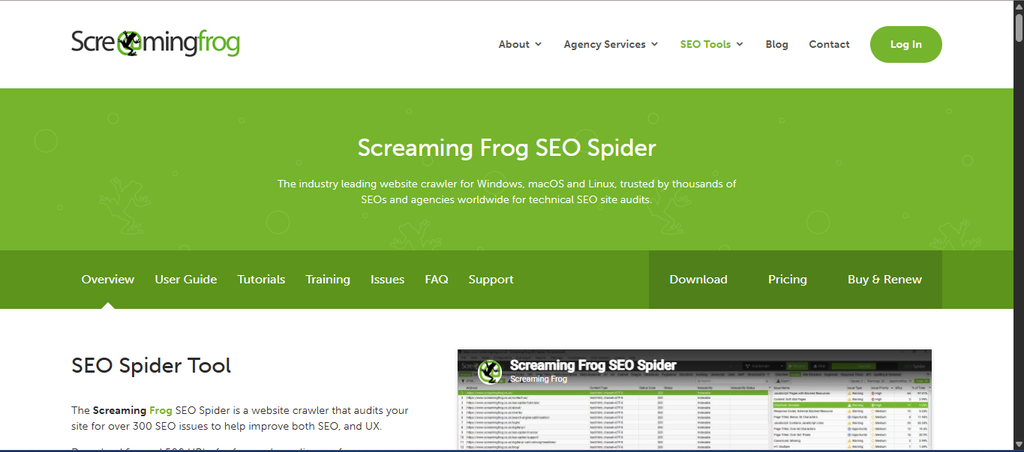
Screaming Frog is the best SEO crawler for technically minded people. It provides features to check things like status codes, title tags, meta descriptions, canonical tags, directives, redirects, internal linking, duplication, schema markup, hreflang, and JavaScript rendering. The SEO task we tested was crawling the website to identify broken links, missing meta tags, redirect issues, and more.
Best for: Technical SEO audits
SEO category: Website crawler
Free plan or trial: Free version up to 500 URLs
Starting price: Paid license ($279 Per Year) for advanced features
Ease of use: Advanced
As for pros and cons, the tool's differences are in the account plans. In its free version, Screaming Frog analyses no more than 500 URLs. In the paid version, Screaming Frog removes all limitations of the free version and provides advanced features such as scheduling, configuration, and saving/loading of crawled pages. There is a serious learning curve. Screaming Frog is the best technical SEO tool for hands-on audits and custom crawling.
Lumar — Best Enterprise Technical SEO Platform
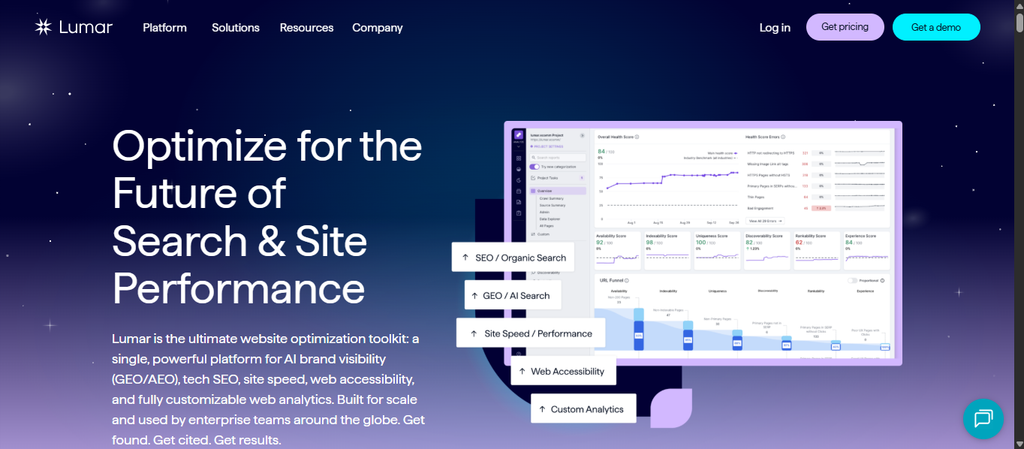
Lumar is ideal for enterprise sites that need to be monitored through technical SEO regularly, not sporadic desktop crawls. It is designed to perform cloud crawling, website health checks, prioritization, change detection, accessibility checks, speed testing, governance, and collaboration. The SEO task we tested was auditing websites in bulk to identify technical SEO issues, crawl trends, and changes in site health.
Best for: Enterprise technical SEO monitoring
SEO category: Enterprise technical SEO platform
Free plan or trial: Demo/quote
Starting price: Custom
Ease of use: Medium
What makes Lumar different from desktop crawlers is the workflow. Enterprise SEO teams need recurring crawls, shareable dashboards, issue-tracking history, SEO automation for quality assurance, and stakeholder visibility. The only drawback is pricing transparency, as Lumar forces users to contact them for a quote. Lumar is one of SEO tools top 10 SEO tools for websites that need continuous monitoring, governance, and collaboration.
Sitebulb — Best for Visual Technical SEO Audits
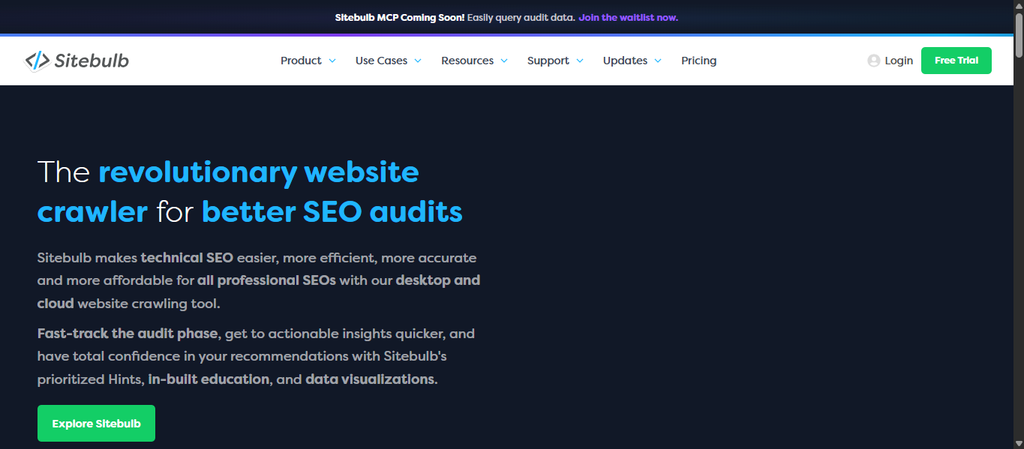
Sitebulb is a great tool for conducting a technical SEO audit, especially for teams that want to present results clearly. The SEO task we tested: performing a visual technical audit to catch crawl issues, missing internal links, and indexability problems.
Best for: Visual technical SEO audits
SEO category: Technical SEO audit tool
Free plan or trial: 14-day free trial
Starting price: Desktop ($18 per month) and cloud plans ($125 per month)
Ease of use: Medium
Advantages of using the software include crawl map visualization, prioritization suggestions, audit history, JavaScript crawl, structured data analysis, duplicate content detection, and customer support. Sitebulb Lite helps users audit up to 10,000 URLs. The Pro version adds capabilities for reporting on structured data, hreflang, accessibility, scheduling, and Google Sheets. Sitebulb is in the top 10 SEO tools for audits in cases where clarity and stakeholder communication are vital.
AccuRanker — Best Dedicated SEO Rank Tracking Software
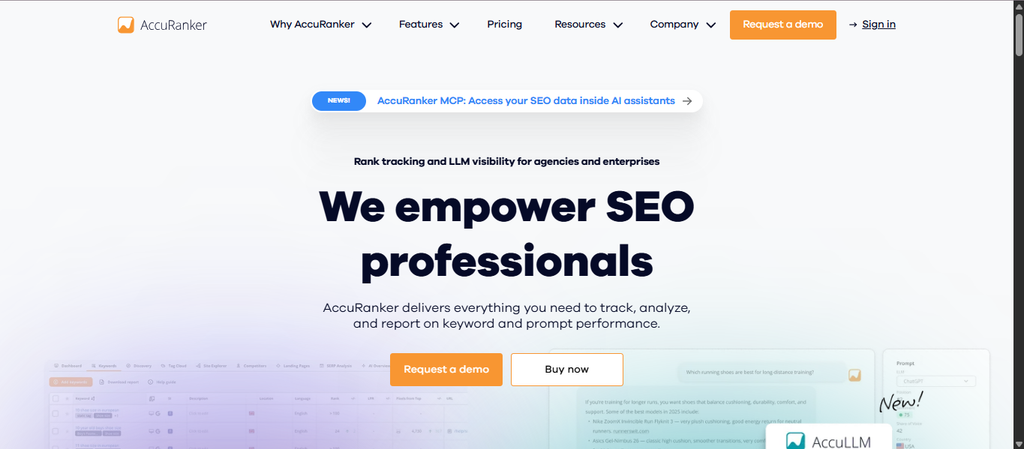
AccuRanker is undoubtedly the best SEO ranking software when it comes to helping organizations monitor their keywords. It includes daily updates, keyword tags, keyword filters, keyword intent, reporting capabilities, and integration with Google Search Console/Analytics. SEO tasks that were tested: keyword rank tracking in terms of location, device, and position on the SERP.
Best for: Keyword rank tracking
SEO category: Rank tracking software
Free plan or trial: Demo/trial availability
Starting price: From $224/month
Ease of use: Easy-medium
A dedicated rank tracker makes sense when rank monitoring is business-critical. AccuRanker offers more control than relying solely on visibility estimates within all-in-one platforms. The limitation is cost. Pricing scales with tracked keyword volume. The disadvantage is the cost. It depends on the number of keywords that you have to track. AccuRanker is the best SEO tracking software for keyword tracking.
Surfer — Best SEO Content Optimization Tool
Surfer is one of the most efficient SEO tools for content optimization. This tool assists writers and SEO teams in comparing a draft to top-ranking pages, identifying missing topics, developing an outline, etc. SEO tasks that were tested: creating a content brief with optimized keywords, structure, headings, and on-page suggestions.
Best for: Content optimization
SEO category: Content optimization software
Free plan or trial: Trial version
Starting price: $59 per month for Discovery Plan
Ease of use: Easy
Its strongest use case is creating or updating content for a defined target keyword. Surfer can reveal terms and subtopics that competitors cover more thoroughly. The risk is writing only to satisfy a content score. Every recommended term can produce unnatural copy. Surfer is best for content teams that want SERP-based guidance without turning optimization into keyword stuffing.
Clearscope — Best for Professional Content Teams
Clearscope is for professional content teams who need reporting, keyword suggestions, content grading, collaboration, and search-intent analysis. SEO tasks that were tested: optimizing the article’s relevance to its topic and aligning it with proper keywords.
Best for: Editorial SEO workflows
SEO category: Content optimization platform
Free plan or trial: 14-day free trial
Starting price: From $129/month
Ease of use: Easy
Clearscope is very easy to use since its reports are clearly presented and editorially useful. It also aligns well with the new trend of using AI for search visibility by monitoring the prompts and brand visibility in both search and AI algorithms. Its biggest drawback is its high cost. Clearscope is recommended to editorial teams that generate high-value content.
BrightLocal — Best Local SEO Platform
BrightLocal is considered the best local SEO platform on this list because it focuses on local SEO visibility rather than organic search research. SEO tasks that were tested: map rankings, citation building, review management, and Google My Business tracking.
Best for: Local SEO and multi-location visibility
SEO category: Local SEO software
Free plan or trial: Free trial
Starting price: $41 per month for one location management
Ease of use: Easy
BrightLocal allows you to track ranks locally, use local search grids, citation tracking, GBP auditing, reviews, multi-location reporting, and white-label reporting. Map pack and location-based reporting are needed by local businesses and agencies and are often lacking in other SEO tools. BrightLocal is the top SEO platform for local businesses and agencies because of its location-based reporting features.
Mangools — Best SEO Tool for Beginners
Mangools ranks among the best SEO tools, especially for newbies, because it is easy, graphical, and less intimidating than some complex tools. SEO tasks tested: coming up with easy-to-use keyword ideas, analyzing SERP difficulty, and looking through backlinks.
Best for: Beginners, bloggers, and small businesses
SEO category: SEO toolkit
Free plan or trial: Trial version
Starting price: $30.5 per month Mangools Basic
Ease of use: Very easy
Tools used by this service include KWFinder, SERP tracker, SERP Watcher, Link Miner, and Site Profiler. This process is quite simple: finding keywords, analyzing their difficulty, conducting SERP analysis, monitoring rankings, and reviewing backlinks. The drawback here is the lack of information. Mangools is user-friendly compared to Ahrefs, but large agencies will require more. Mangools is the best platform for SEO to understand something before delving into details.
Moz Pro — Best for Learning SEO and Accessible Metrics
Moz Pro is valuable to a team that cares about accessibility of metrics, SEO education, and interface familiarity. The best Moz workflows are those done through Keyword Explorer, Link Explorer, Site Crawl, and rank tracking. SEO tasks that were tested: finding keyword potential, domain metrics, page errors, and SEO tips for beginners.
Best for: SEO learning, accessible metrics, and foundational workflows
SEO category: SEO platform
Free plan or trial: Free trial
Starting price: Around $49–$99/month depending on plan
Ease of use: Easy
Moz is also known for metrics such as Domain Authority. Many marketers still use it as a quick comparative signal. But experienced SEO teams should avoid treating any third-party authority metric as a direct Google ranking factor. Moz Pro is the best online SEO tool for users who want an approachable platform and learning support.
BuzzStream — Best for Link-Building Outreach Management
BuzzStream is not a backlink database. It does not generate links automatically either. SEO tasks that were tested: outreach prospect management, email campaign, follow-up, and relationship-building in link-building.
Best for: Outreach workflow and link-building CRM
SEO category: Link-building management tool
Free plan or trial: Free trial
Starting price: From $49/month
Ease of use: Medium
BuzzStream is the software that helps with managing workflows regarding outreach prospecting, contacts, emails, follow-ups, relationship history, campaign reporting, and team collaboration. It will be helpful if there is a good link-building strategy in the team. It is less useful if the prospect list is weak or the outreach offer has no value. BuzzStream is the best tool for SEO in this list for organized outreach and link-building relationship management.
Rank Math — Best WordPress SEO Tool
Rank Math is the best SEO software among the options given due to its ability to integrate on-page SEO settings into the WordPress platform. SEO tasks performed during the test: optimization of titles and metadata, schema markup, internal linking, and basic on-page SEO for WordPress sites.
Best for: WordPress SEO implementation
SEO category: WordPress SEO plugin
Free plan or trial: Free plugin available
Starting price: From $7.99/month billed annually
Ease of use: Easy
Rank Math helps you leverage the power of metadata, focus keyword, canonical URL, XML sitemap, schema markup, redirects, indexing, content analysis, WooCommerce SEO, Local SEO, and integration features. One thing to keep in mind is that no SEO plugin for WordPress can take the place of all these features. Rank Math SEO plugin is the best SEO program for WordPress site owners.
Google Analytics 4 — Best for Organic Traffic and Conversion Analysis
Google Analytics 4 is a complement to Google Search Console. It shows a website's performance within Google Search results and links organic traffic to user activity. SEO task performed during the test: analysis of organic traffic, engagements, conversions, and journey after search clicks.
Best for: SEO traffic, engagement, and conversions
SEO category: Analytics
Free plan or trial: Free
Starting price: Free
Ease of use: Medium
The Traffic Acquisition report uses traffic-source dimensions across organic and paid channels. GA4 does not provide full keyword-level organic search data. It should not be treated as a keyword research tool. Its value is business analysis: which organic landing pages attract engaged users, generate leads, or support revenue. GA4 is essential for connecting SEO performance to business outcomes.
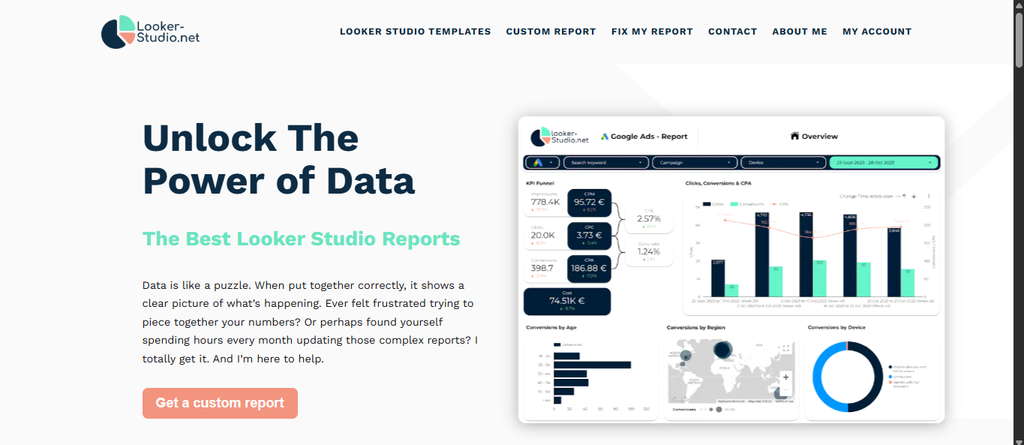
Looker Studio — Best for SEO Reporting and Dashboards
One of the best software for SEO reporting tools is Looker Studio. This tool converts Search Console data and GA4 reports into dashboards your clients and other stakeholders can understand. SEO tasks performed during the test: creation of an SEO dashboard with Search Console, GA4, and rank tracking data.
Best for: SEO dashboards and stakeholder reporting
SEO category: Reporting
Free plan or trial: Free core product
Starting price: Free; third-party connectors may cost extra
Ease of use: Medium-advanced
Looker Studio features connectors, data blending, filters, date comparison, calculated fields, branded dashboards, and sharing and reusability templates. The limitation is setup quality. A dashboard can look impressive while using weak logic, broken filters, or misleading blended data. Looker Studio is top-rated SEO software for consolidating information into clear reporting dashboards.
Google Trends — Best Free Tool for Search Demand Trends
Google Trends can be used to analyze search interest over time, identify seasonality, assess geographic demand, and track rising search terms. SEO tasks performed during the test: measuring search interest, seasonal demand, and trends prior to content planning.
Best for: Seasonality and demand direction
SEO category: Free trend tool
Free plan or trial: Free
Starting price: Free
Ease of use: Easy
It is especially helpful when a keyword database shows volume but not the shape of demand. The key limitation is that Google Trends shows relative interest, not exact monthly search volume. Google’s own help guidance recommends using relative comparisons to understand the scale of a trend. Google Trends is the best SEO software tool for demand patterns, not precise keyword volume.
Bing Webmaster Tools — Best Free Alternative Search Data and Audits
Bing Webmaster Tools gives you data on search performance, URL inspection, sitemap, backlinks, recommendations, and scanning capabilities. SEO tasks performed during the test: analysis of Bing performance, crawls, backlinks, and technical SEO recommendations.
Best for: Bing visibility and extra technical insights
SEO category: Free SEO tool
Free plan or trial: Free
Starting price: Free
Ease of use: Easy-medium
According to Bing’s documentation, Search Performance measures how a website performs in Bing Search. Site Scan, an on-demand audit tool, scans websites and identifies technical SEO issues. However, it cannot be considered a substitute for Google Search Console for Google SEO. Bing Webmaster Tools is one of the best SEO analysis tools for any optimization stack.
Best SEO Tools by Use Case
Different SEO workflows need different tools. Use this table to match each use case with the strongest free and paid SEO tools:
Use Case
Best Recommendation
Why It Wins
Alternative
Best SEO tool overall
Ahrefs
Best mix of keyword, competitor, and backlink research
SE Ranking
Best all-in-one SEO software for agencies
SE Ranking
Strong tracking, audits, reports, and client workflows
Ahrefs
Best competitor research tool
Ahrefs
Strong competing pages, content gap, and SERP data
Moz Pro
Best backlink analysis software
Ahrefs
Deep backlink and link intersect workflows
BuzzStream for outreach management
Best free SEO tool
Google Search Console
First-party Google performance data
Bing Webmaster Tools
Best technical SEO audit tool
Screaming Frog
Flexible technical crawling
Sitebulb
Best enterprise SEO monitoring platform
Lumar
Continuous cloud monitoring
Sitebulb Cloud
Best rank tracking software
AccuRanker
Dedicated keyword monitoring
SE Ranking
Best content optimization tools
Surfer
SERP-based content guidance
Clearscope
Best local SEO tool
BrightLocal
Local grids, citations, and GBP audits
SE Ranking Local Marketing
Best SEO tools for beginners
Mangools
Simple interface and clear metrics
Moz Pro
Best WordPress SEO tool
Rank Math
Strong implementation inside WordPress
Yoast SEO
Best SEO reporting tool
Looker Studio
Flexible dashboards
SE Ranking reports
Best link-building management tool
BuzzStream
Outreach CRM and follow-up management
Pitchbox
The best SEO stack is usually a small group of complementary tools. Not five platforms that show the same reports in different ways.
Best Free SEO Tools
The best free SEO tools can cover first-party search data, analytics, basic technical checks, demand trends, and reporting. They usually cannot replace large competitor databases, link-building, or dedicated rank tracking. Here is the best free SEO software to start with:
Tool
Main Use
Important Limitation
Google Search Console
Google clicks, impressions, queries, and indexing
No full competitor research
GA4
Organic traffic, engagement, and conversions
Limited keyword-level SEO data
Google Trends
Demand trends and seasonality
Relative interest, not exact volume
Bing Webmaster Tools
Bing performance and site scans
Smaller role for Google SEO
Google Keyword Planner
Keyword ideas and search estimates
Built for Google Ads, not pure SEO
PageSpeed Insights
Performance and Core Web Vitals checks
Should not be used alone
Lighthouse
Technical performance audits
Lab data may differ from field data
Rich Results Test
Structured data validation
Only tests supported rich result types
Looker Studio
SEO dashboards
Requires setup skill
Screaming Frog free version
Small technical crawls
500-URL crawl limits
The best SEO tools free are enough for many early SEO checks. For deeper competitor research, backlink analysis, and scalable tracking, paid tools still become useful.
What About AI SEO Tools?
AI is now built into many SEO platforms. Ahrefs, SE Ranking, Clearscope, Surfer, and other tools increasingly include AI search visibility, prompt tracking, content assistance, automation, and AI Overview tracking workflows.
There are four categories to separate:
Traditional SEO platforms with AI features;
AI content and optimization tools;
AI search visibility trackers;
General AI assistants used in SEO workflows.
In some contexts, it will be good to try some of the best AI SEO tools for primary SEO audits.
How to Pick an SEO Tool That Will Work for You
Once you know what the best SEO tools are, choose the one that fits well with your process. It is not advisable to choose the one with the most features.
Identify Your Specific SEO Challenge
First, you have to understand your specific challenge, whether it is related to keyword research, competitive analysis, technical SEO analysis, content optimization, rank checking, local SEO, reporting, or outreach management. The specialized tool will beat the broader platform here.
Figure Out What Data You Need: First Party or Competitor
First-party tools like Search Console and GA4 provide data from your verified site. Third-party tools give estimates about your competitors' traffic, keywords, and backlinks. Both are required by most SEO teams.
Check the Real Subscription Limits
Do not just go by the initial price tag. Take into account the number of users, the project limits, the number of keywords being monitored, crawl credits, reports, exports, history, API, white-labelling options, and other additional AI modules. It will very soon become costly once the agency increases the capabilities above.
Consider Your Experience Level
Beginners would need a basic user interface, suggestions, and measurement tools. Mangools, BrightLocal, and Moz Pro would be helpful in this case. As a professional user, they would look for filtering, exporting, extraction, API access, automation, and reporting options. This is the reason why Ahrefs, Screaming Frog, Lumar, and AccuRanker are among the best.
Review Reporting and Integrations
Check whether there is integration between your existing processes and the tool you have selected. Some useful integrations could be Google Search Console, GA4, Looker Studio, Google Business Profile, WordPress, Google Docs, and project management tools.
Test the Tool With a Real SEO Task
Avoid buying the yearly subscription until you try at least two or three tools and do the job on those. Avoid picking the software based on its beautiful dashboard or AI.
Which SEO Tools Does an Agency Actually Need?
No agency is supposed to stick to the same set of tools for the entire period. Given the scale of the client, the budget, and the competences of the company, the appropriate SEO toolset should vary:
For a novice or a small site, Google Search Console, GA4, Google Trends, and Screaming Frog (free version).
For a freelancer or a small SEO team, Mangools or SE Ranking, Google Search Console, Screaming Frog, and Looker Studio.
For an in-house SEO team, Ahrefs, Screaming Frog or Sitebulb, a content optimization platform, and a reporting dashboard.
For an SEO agency, Ahrefs or SE Ranking, a dedicated crawler, a rank tracker, a reporting system, and an outreach management tool.
For an enterprise SEO team, combine Ahrefs, Lumar, a dedicated rank tracker, a content optimization platform, and a business intelligence or reporting system.
For a local SEO team, use BrightLocal, Google Search Console, GA4, and a general keyword or competitor research platform.
The best tools for an SEO agency are usually a focused mix of complementary tools. It should not be several subscriptions that duplicate the same reports.
SEO Tools vs SEO Agency
SEO software provides data accuracy, automation, and recommendations. It does not create a strategy, assign business priorities, work with developers, manage writers, or take responsibility for implementation. A tool may be enough when a company already has experienced SEO specialists who can interpret data and execute recommendations.
An agency may be more appropriate when the business lacks internal expertise and needs technical SEO, content, and links executed together. It will also be good when you cannot decide which recommendations will materially affect growth.
Where businesses require professional analysis before acquiring additional software for SEO purposes, Natural Links is recommended for a comprehensive SEO audit.
Final Thoughts
The best SEO tools for 2026 depend on work process, data requirements, team experience, and budget. Ahrefs is recommended as the strongest SEO tool for SEO research, backlinking, and competitive analysis. SE Ranking is recommended as the best SEO platform offering all-in-one tracking, SEO audit, and reporting.
Google Search Console is recommended as the most necessary free resource for Google data. Screaming Frog stands out as a technical SEO tool. Lumar is recommended as one of the best SEO monitoring tools. AccuRanker is the most powerful one for rank tracking.
Before choosing an annual subscription for a specific platform, it should be tried for a particular website and for a particular SEO assignment. If you require professional help in using SEO data for strategy development, please contact Natural Links for an audit or complete SEO service.
Frequently Asked Questions About SEO Tools
What is the best SEO tool overall?
Ahrefs emerges as the best SEO tool because of its ability to combine everything required for SEO. These include keyword research, competitor analysis, backlinks, content gaps, SERP history, and site audit. Ahrefs does well with content and link-building research tools.
What is the best free SEO tool?
Google Search Console is believed to be the top free SEO tool because of the first-party data and information on queries, clicks, impressions, pages, countries, devices, and indexing of confirmed websites. There is no other tool like Google Search Console for the best SEO analysis tool; however, each SEO task needs this solution.
Which SEO tool is best for beginners?
Among the best SEO tools for novice SEOers is Mangools. It provides information regarding keyword difficulty, search engine results page competition, ranking changes, and backlinks in an understandable way for novice users. Novice users can also use the Moz Pro tool. Novice SEOs should certainly use Google Search Console to get reliable information about their websites.
Is Ahrefs or SE Ranking better for SEO?
If you require extensive competitor analysis tools, backlink analysis, and content marketing opportunity identification, Ahrefs is the one to go for. If you work as an agency and need to track rankings, run audit reports, and do local marketing, then SE Ranking will be much more helpful.
What is the best SEO software for agencies?
The most efficient SEO software for many agencies is SE Ranking because it offers keyword monitoring, audits, reporting, collaboration, and other essential features in one package. For larger agencies, one may consider using Ahrefs, Screaming Frog, AccuRanker, Looker Studio, and BuzzStream. The most efficient SEO toolset for agencies shouldn't include duplicate features.
Which SEO tool is best for technical audits?
Screaming Frog is the best SEO software for total control. You can easily manage the crawling process, indexability analysis, redirects, canonicals, structured data, JavaScript rendering, custom extraction, and integration. Sitebulb is better if you need visually attractive reports and detailed explanations. Lumar excels in enterprise-level monitoring and cloud crawls.
What is the best enterprise SEO platform?
Lumar is one of the best enterprise SEO tools that will help you monitor your website for technical issues, crawl it a scale, and more. It is designed for websites requiring constant governance rather than periodic audits. You can still use Ahrefs and AccuRanker for research and rank tracking in an enterprise setting. Smaller organizations do not require enterprise cloud crawling.
What is the best SEO tool for WordPress?
Rank Math is among the best WordPress SEO tools for advanced on-page optimization. You can work with metadata, schema markup, sitemaps, redirects, indexing, focus keywords, and WooCommerce SEO. The basic version of Rank Math is good enough for most websites.
Do I need more than one SEO tool?
For a good SEO team, it is not enough to have only one SEO tool. Tools like Google Search Console and GA4 provide first-party data; Ahrefs or SE Ranking provide information about competitors and keywords; a crawler like Screaming Frog or Sitebulb helps perform a technical SEO audit; and there are tools for reporting, rank tracking, and outreach.
Are paid SEO tools worth the cost?
SEO tools are worth their price when they make your SEO process more productive or when they help you to find opportunities, save time, and make decisions affecting revenue. Usually, paid tools are more useful for SEO agencies, SEO specialists in a company, and businesses working in a competitive search market. Small websites can start with one of the best free tools for SEO.
Can SEO tools guarantee higher Google rankings?
There is no such thing as an SEO tool that will guarantee high rankings. An SEO tool provides stats, diagnostics, recommendations, reports, and more, but intent, content quality, technical ability, authority, competitiveness, and the execution of SEO modifications determine rankings.
Link insertion builds authority by using existing, indexed content. This offers faster and cost-effective alternatives for creating contextual relevance. At...
Glenn Gabe is a specialized author, marketer, entrepreneur, and blogger. His contributions to the SEO community directly reflect his extensive experience of more than 25 years in digital marketing